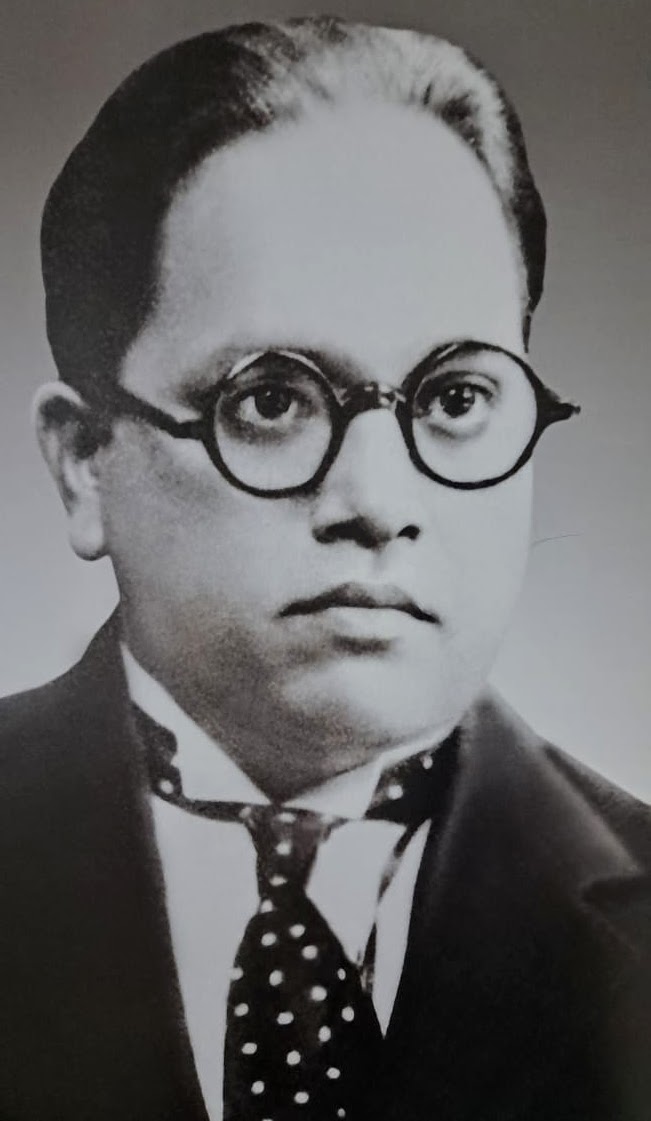
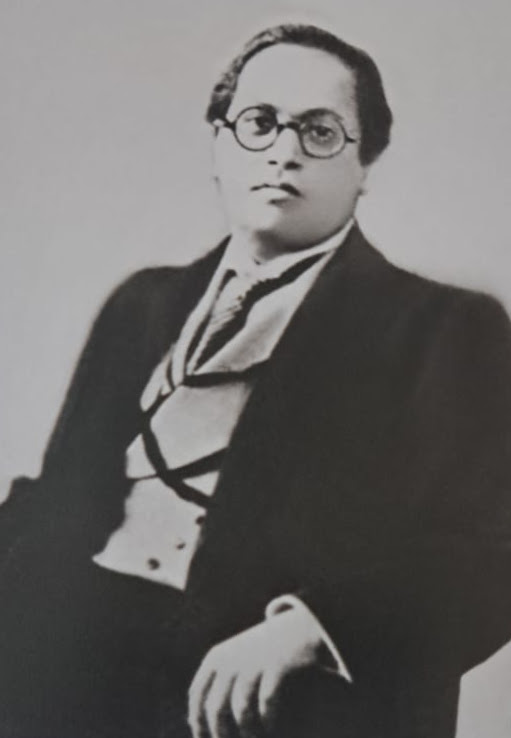
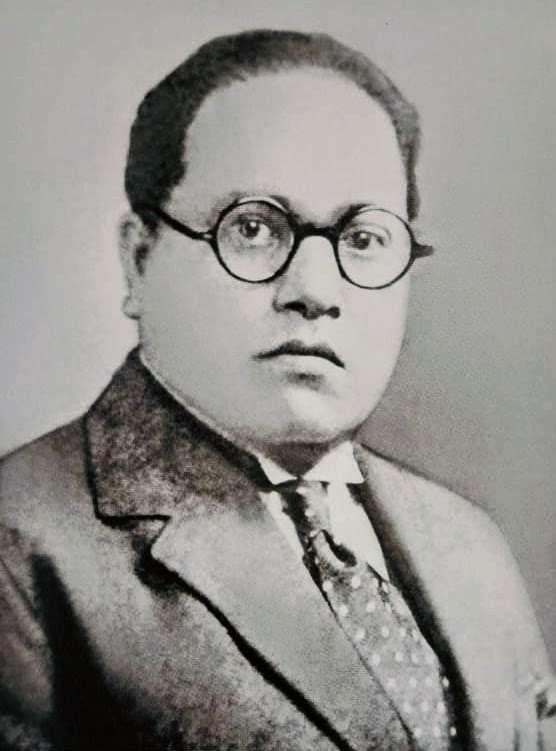
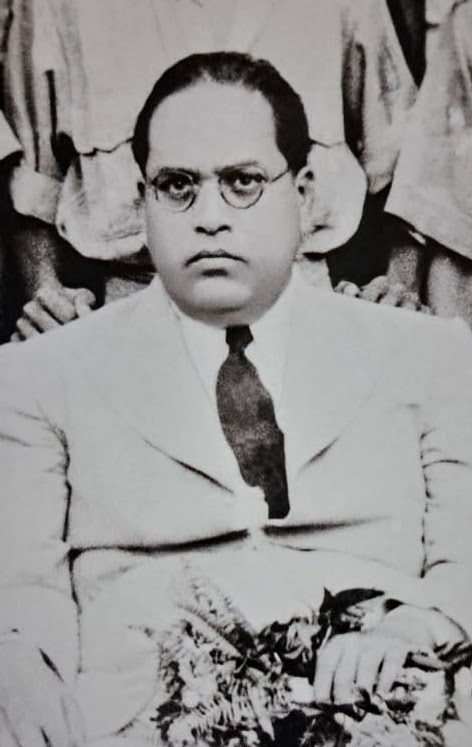
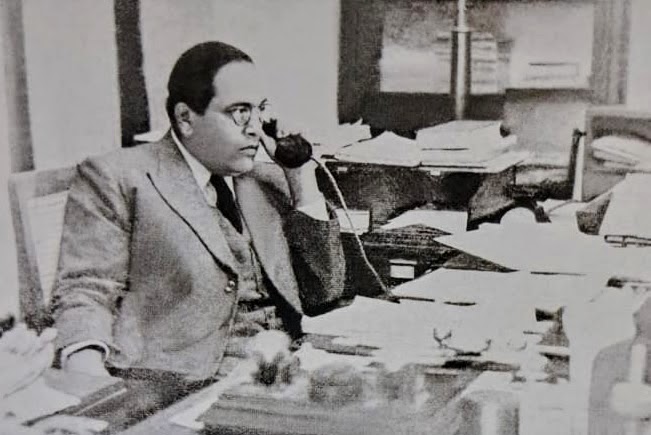
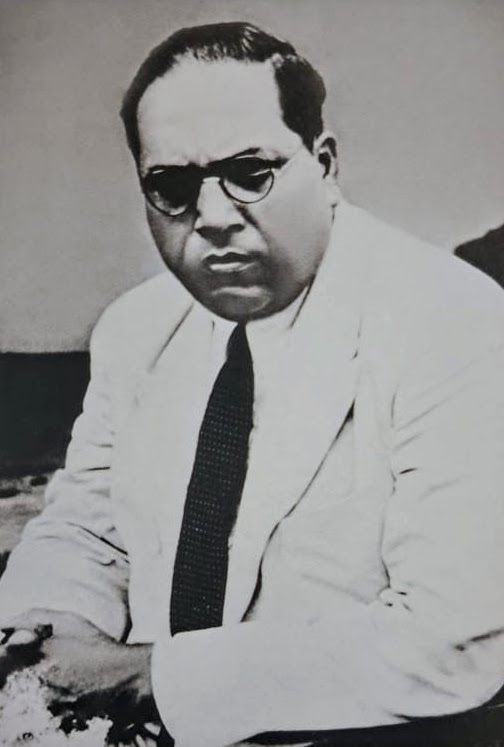
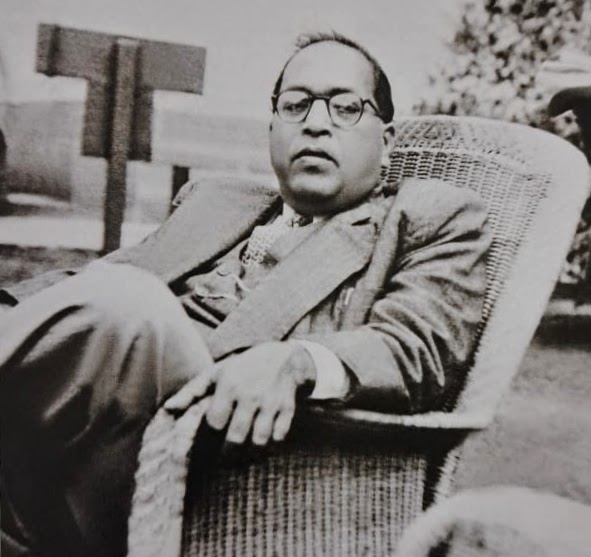
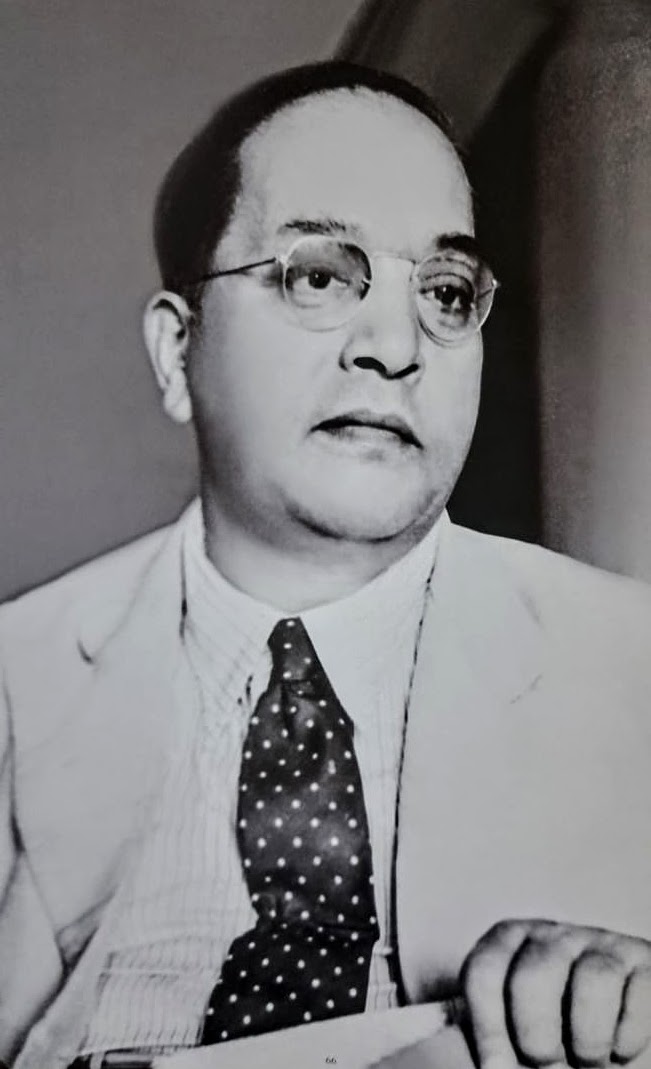
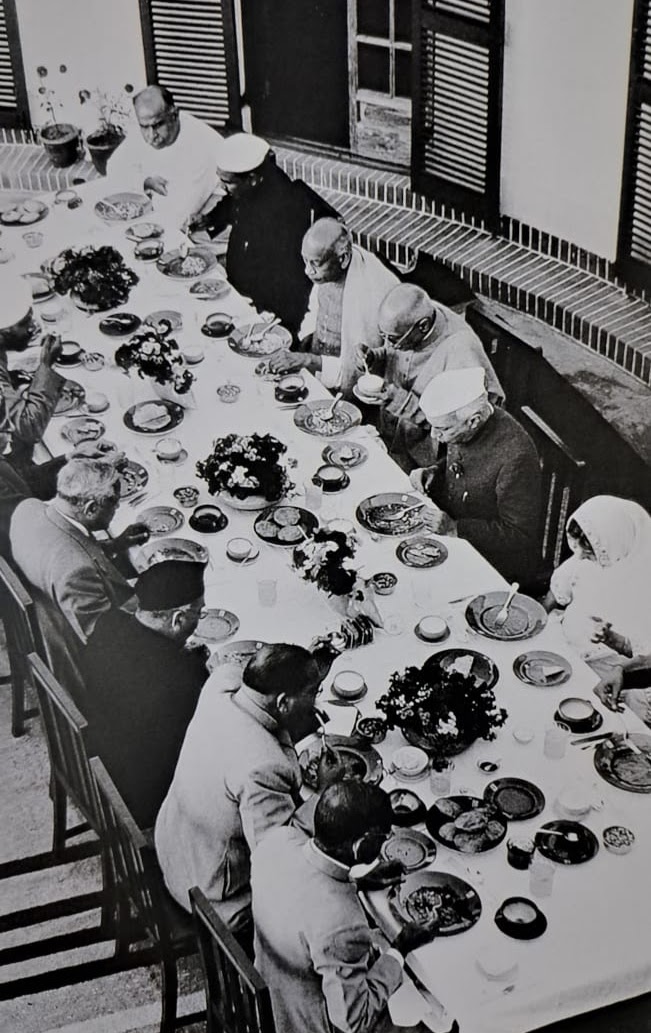
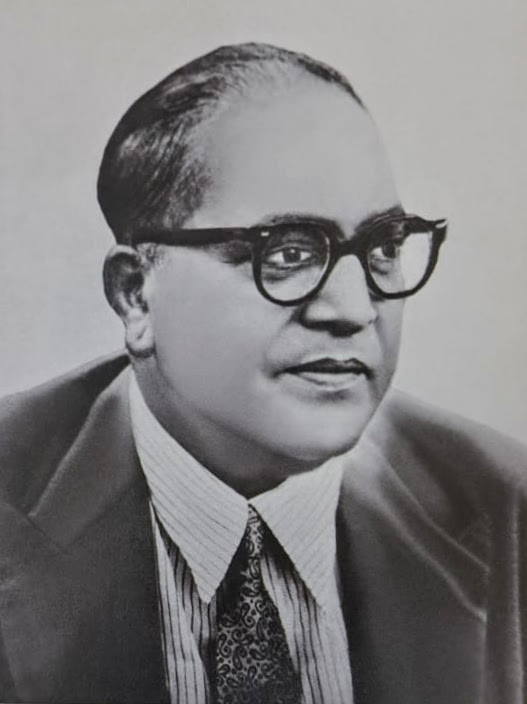
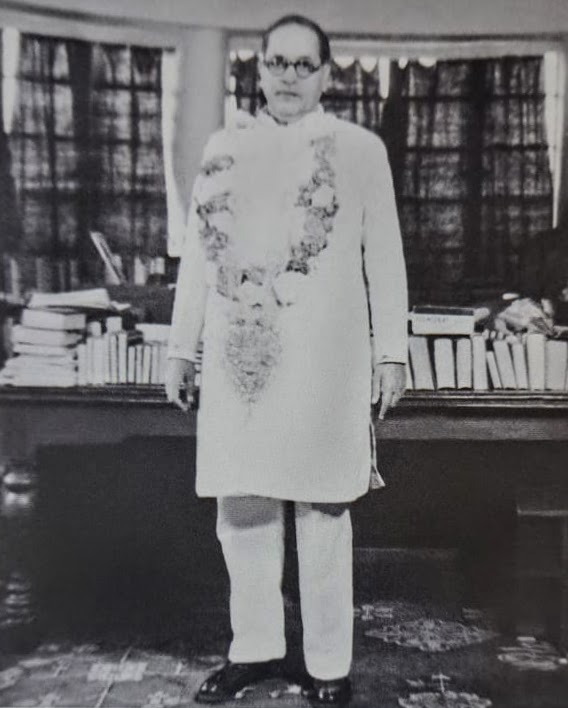
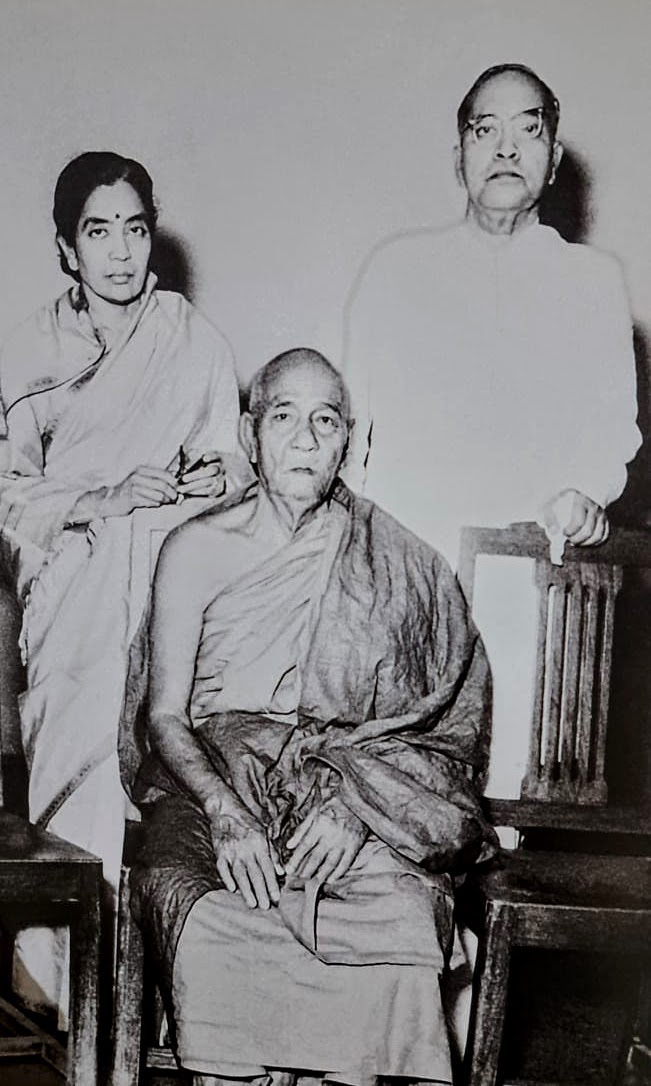
Dr.Bhimrao Ramji Ambedkar, popularly known as ‘Babasaheb’, was born on 14 April 1891 at Mhow in the vicinity of Indore in Madhya Pradesh. His father’s name was Ramji and mother’s name was Bhimabai. His ancestral village was Ambadave in Mandagad Taluka in the district of Ratnagiri in Maharashtra. He belonged to an untouchable Mahar community. He came from a valiant and cultured family. His father Ramji, and grandfather Maloji were in the British Army. His mother belonged to Murbad village in Thana district in Maharashtra and her family also had the tradition of military service.
At the time of his birth his father Ramji was serving as Headmaster in Military School at Mhow and had attained the rank of Subedar. He retired from service when Bhim was two years old. After retirement his father came to Dapoli in Ratnagiri district in the year 1894. Soon his father was appointed as storekeeper in Ratnagiri and later on transferred to Satara in the year 1896. Later on his family shifted to Bombay in 1904 and lived in a room in Dabak Chawl at Lower Parel, with his two brothers, Balaram and Anandrao, two sisters, Manjula and Tulsa, and his aunt Meerabai.
Ramji was a staunch follower of Kabir Panth. He used to read and sing devotional songs of saint-poet Chokha Maharaj and Tukaram Maharaj. He used to read Bhagavad Gita, Ramayana and Mahabharata. He was a teetotaller and vegetarian. He was economically poor, but maintained cleanliness, discipline and religious atmosphere in the family.
Bhimrao completed his primary education at Satara in 1904. Then he was admitted to Elphinston High School, Bombay, from where he had completed his matriculation in the year 1907. He passed his B.A. in 1913 from Elphinston College, Bombay. Then with the financial assistance of Maharaja Sayajirao Gaikwad of Baroda, he went to pursue his further education in the famous Columbia University, New York in July 1913. He was awarded an M.A. in Economics in June 1915 on his thesis, “Ancient Indian Commerce”. Simultaneously, he continued his research leading to Ph.D. He submitted his thesis “National dividend of India — A historic and analytical study” to Columbia University in June 1916 on which he obtained a Ph.D. degree.
His thirst for knowledge was not quenched. He went to London and joined the London School of Economics and Politics, in October 1916. He was awarded M.Sc. for his thesis, “Provincial Decentralization of Imperial Finance in British India”, in June 1921. He was awarded D.Sc. on his thesis, “The Problem of Rupee”, in the year 1923. In the meantime he joined Gray’s Inn where he became Barrister-at-Law.
 He had earlier married Ramabai, daughter of Bhiku Walangkar, resident of Dapoli in Ratnagiri. At the time of marriage Bhimrao was 14 years old and Ramabai was 9 years old. Her father was a poor labourer belonging to the Mahar community. They got a son by name Yeshwant. Ramabai was illiterate. She managed her family with a meagre amount and maintained a very healthy atmosphere in the family. She died on 27 May 1935 due to ill health. Later, Babasaheb Ambedkar, on medical grounds, married Dr Sharada Kabir, a Saraswat Brahmin lady doctor, on 15 April 1948 at New Delhi.
At first he joined as a Lieutenant in the Baroda State Forces in 1913. When he came to know that his father was seriously ill he came to Bombay, within a few days of joining the service. However, Ramji breathed his last before his arrival in Bombay. Then he did not return to Baroda to join the service as he was frustrated by the acute untouchability threat which he had to face. Again, when he returned to India after completing higher education in the USA and UK in July 1917, he joined the Maharaja’s service at Baroda as a Military Secretary. It was obligatory for him to serve the Baroda State for a period of ten years as per the bond signed by him as a precondition for obtaining the grant of scholarship for prosecuting higher studies in foreign countries. He was again subjected to discrimination on the grounds of untouchability by the staff in the department. He could not get residential accommodation also. Therefore, he had to leave the service in November 1917. He returned to Bombay.
He was appointed as a Professor of Political Economy in Sydenham College, Bombay on 11 November 1918. He resigned his professorship on 11 March 1920. Again he went to London in September 1920 to complete his studies. He was there till 1923.
After returning from England he started his legal practice at the Bombay High Court in June 1923. From June 1925 to March 1928, he served as a part-time teacher in Mercantile Law in Batliboi’s Accountancy Training Institute, Bombay. From June 1928 to March 1929 he served as a Professor of Law in Government Law College, Bombay. He served as Principal of the same college from June 1935 to June 1938. Thereafter, he resumed his full time legal practice and socio-political work till his last.
He started his mission from 1919 onwards. On 27 January 1919, he gave evidence before the Southborough Committee on Franchise and strongly advocated a separate electorate with reserved seats in the legislature for the Depressed Classes. In order to bring socio-political awakening to the Depressed Classes he started Mook Naik (Leader of the Dumb), a fortnightly Marathi from Bombay on 31 January 1920. It continued till 1923. He presided over a conference held at Mangaon near Kolhapur on 21 March 1920 where the Maharaja of Kolhapur, Shahu Chhatrapati addressed the conference.
The first All India Conference of the Depressed Classes was held at Nagpur on 30-31 May and 1 June 1920. It was presided over by Chhatrapati Shahu Maharaj and Dr Babasaheb Ambedkar, among others, addressed the conference. It was attended by delegates from Bombay, CP and Berar, Madras and Bengal. The conference resolved, among others, to have true representatives of the Depressed Classes in the legislature.
After spending two and half years from September 1920 to February 1923 in England for higher studies he returned to India and resumed his mission. In order to institutionalize the socio-political activities for the emancipation of the Depressed Classes, he formed the Bahishkrit Hitkarini Sabha (Depressed Classes Welfare Organization) on 20 July 1924 at Bombay. Its President was Sir Chimanlal Setalvad, managing committee Chairman was Babasaheb Ambedkar and its Secretary was S.N. Shivtarkar. The Sabha started one hostel at Solapur for students belonging to the Depressed Classes, on 4 January 1925. The management of the hostel was entrusted to Shri Jivappa Subha Aydale, a social worker from Solapur.
He was nominated to the Bombay Legislative Council with effect from 18 February 1927 for a period of five years. He was re-nominated in 1932 for a period of five years.
 In order to assert the right to equality, he undertook a unique satyagraha at the Choudar Tank (Chavdar Lake) at Mahad, along with his followers, on 20 March 1927. They burnt Manusmriti at Mahad on 25 December 1927 as a protest against inequality preached by it. During this period he started Bahishkrit Bharat, a fortnightly on 3 April 1927. It continued up to 15 November 1929. He formed Samaj Samata Sangh (Social Equality League) on 4 September 1927 and Samata Sainik Dal (Equality Volunteer Army) in December 1927 to bring a new vigour and militancy to the march of equality.
He introduced Bill No. XII of 1928 to amend the Bombay Hereditary Offices Act, 1874, in the Bombay Legislative Council on 19 March 1928. Again, he introduced the Bill to that effect in the Bombay Legislative Assembly (Bill No.XXIII of 1937) on 17 September 1937. The objects of the said Bill were to make the better provisions for the remuneration of the Vatandars; to allow commutation of vatans; to free the inferior Vatandars from the obligation to serve the ryots; and to define the duties of officiating Vatandar. Moreover, he introduced the Bill No.XX of 1937 to abolish the Khoti system in the Bombay Legislative Assembly, on 17 September 1937. The main objective of this Bill was to abolish the exploitative Khoti system prevailing in the Konkan area and give the inferior holders the status of occupants. However, these bills were not passed by the Bombay legislature.
When the Indian Statutory Commission under Sir John Simon came to India, he submitted the statement on 29 May 1928 on behalf of the Depressed Classes and gave evidence on 23 October 1928. He demanded adult franchise, joint electorate and reserved seats for the Depressed Classes. However, the commission did not take due cognizance of his demands.
He founded the Depressed Classes Education Society at Bombay on 14 June 1928. The Bombay Government accorded sanction to five hostels, established at Panvel, Thane, Nasik, Pune and Dharwad for the special benefit of high school students belonging to the Depressed Classes.
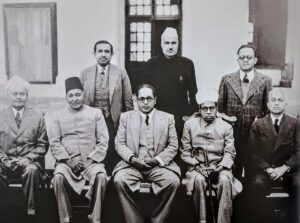 In order to assert the right to religion and religious equality he launched the Temple Entry Satyagraha at Kalaram temple, Nasik on 2 March 1930. The satyagraha was in continuation, of course intermittently, for a period of five years, but in vain. It ultimately culminated in his famous declaration renouncing Hinduism, at Yeola on 13 October 1935.
In the meantime he presided over the All India Depressed Classes Congress held at Nagpur on 8-9 August 1930. The conference reposed its faith in the leadership of Dr Babasaheb Ambedkar. The second All India Depressed Classes Congress was held on 7 and 8 May 1932 at Kamathi, near Nagpur. It was presided over by R.B. Muniswamy Pillai of Madras. Shri L.N. Haridas presented the welcome address. Dr Babasaheb Ambedkar, R.B. Srinivasan, R.L. Biswas, Swami Achhutanand, M.B. Mullick, Hansraj, N.C. Dhusia and many others addressed the conference. The conference accepted the leadership of Dr Babasaheb Ambedkar and reiterated the demands put before the Round Table Conferences, by Babasaheb Ambedkar and R.B. Srinivasan. The conference finally elected one All India Working Committee in which R.B. Muniswamy Pillai was elected as President, R.L. Biswas as General Secretary and T.C. Sakhare and Raisaheb Ram Sahai as its Joint Secretaries.
In order to discuss and decide the nature of the future constitution of India, and resolve the communal problem, the British Government convened the Round Table Conferences in London, and invited, among others, Dr Babasaheb Ambedkar and R.B.R. Srinivasan as representatives of the Depressed Classes to the said conferences. This was, of course, the first occasion when the British Government recognized the Depressed Classes as a separate element in Indian politics, which could rightly be attributed to the strenuous efforts of Dr Babasaheb Ambedkar. He, however, participated in the Round Table Conference, the first from 12 November 1930 to 19 January 1931; the second from 7 September 1931 to 1 December 1931 and third from 17 November 1932 to 24 December 1932. The British Government conceded the demand for separate electorate to the Depressed Classes put forth by Babasaheb Ambedkar in the first and second conferences. However, due to Mahatma Gandhi’s epic fast against it he had to accept the Poona Pact of 1932 which envisaged a joint electorate with reserved seats. During this period he submitted his Note to the Indian Franchise Committee known as Lothian Committee on 1 May 1932.
 Once again he started one fortnightly namely Janata (The People) on 24 November 1930. It became weekly from 31 October 1931 and it was renamed as Prabuddha Bharat from 4 February 1956.
In order to protect the political interests of the Scheduled Castes and other weaker sections, he founded the Independent Labour Party on 15 August 1936. When general elections were declared under the Act of 1935, he fielded his candidates for certain reserved and non-reserved seats in the Bombay Presidency and in CP and Berar. He contested from Bombay (East) reserved constituency. The other contestants to the same seat were Baloo Palvankar (Cong.), P.N. Rajbhoj and Deorukhkar. Dr Babasaheb Ambedkar was declared elected on 17 February 1937. He took very active interest in the proceedings of the Legislative Assembly. However, the Assembly was prorogued in 1939 in the wake of the outbreak of the Second World War.
When the Industrial Trade Disputes Bill virtually banning strikes was introduced in the Bombay Legislature in September 1938, about 60 labour unions declared a token strike for a day on 7 November 1938 in protest against the said Bill. Dr Babasaheb Ambedkar also actively participated in the strike along with other labour unions.
He founded the first national level political party called All India Scheduled Castes Federation in a special convention held at Nagpur on 18-20 July 1942. R.B.N. Shivaraj (Madras) was elected as its President and P.N. Rajbhoj (Pune) as its General Secretary.
 Dr Babasaheb Ambedkar had got the unique opportunity of being appointed as Labour Member in the Viceroy’s Executive Council with effect from 27 July 1942. He continued to be a Labour Member till July 1946. During these days he rose to the height of popularity and contributed substantially to the uplift of the Scheduled Castes and the labourers. However, the caste Hindus in general went against him. Therefore, no candidate of his SCF could get elected in the general elections held for the provincial assemblies in 1945.
In order to spread higher education among the Scheduled Castes in particular, among others, he founded ‘People’s Education Society’ at Bombay on 8 July 1945. On behalf of the said society he started Siddharth College of Arts and Science (1946), Siddharth Night School (1947), Siddharth College of Commerce and Economics (1953), Siddharth College of Law (1956) — all at Bombay, and Milind Mahavidyalaya (1950) and Milind Multipurpose High School (1955) at Aurangabad.
According to the Cabinet Mission plan the elections to the Constituent Assembly of India were to be held in July 1946. However, Babasaheb Ambedkar had no hope of getting elected from Bombay Legislature. Hence, he got elected to the Constituent Assembly from the Bengal Legislature, on 19 July 1946, with the help of his lieutenant J.N. Mandal and the Muslim League members. However, due to the proposed partition of Bengal in 1947, he lost his membership which he had got with great effort. However, after realizing the intellectual capacity, legal knowledge and staunch nationalism of Dr Babasaheb Ambedkar the Congress nominated him from the Bombay Legislature and got him elected to the Constituent Assembly, on 23 July 1947.
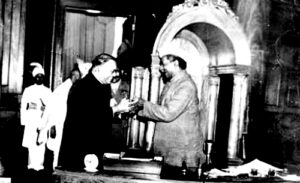 He got another unique opportunity of being nominated as the first Law Minister of free India in the cabinet of Pandit Jawaharlal Nehru. Further, he was elected as Chairman of the Drafting Committee of the Constituent Assembly, on 29 August 1947. He drafted the constitution and presented it to the Constituent Assembly on 26 November 1949 for its acceptance. The same constitution, after having been accepted with certain modifications by the Constituent Assembly, came into implementation on 26 January 1950.
Due to differences of opinion with Pandit Nehru on certain issues like Hindu Code Bill, foreign policy, etc, he submitted his resignation on 28 September 1951 which came into effect on 6 October 1951.
In the general elections held in January 1952, he contested for Lok Sabha from Bombay (north) parliamentary constituency. Shri N.S. Kajrolkar (Congress) was his opponent. Babasaheb Ambedkar was defeated in the election. Again he contested from Bhandara parliamentary constituency (reserved — double member) in the by-elections held in 1954. This time Nama Arjun Borker (Congress) was his opponent. This time Babasaheb Ambedkar was defeated and his opponent got elected. In the meantime, he was elected to the Rajya Sabha from the Bombay Legislature in March 1952. He was a member of Rajya Sabha till the end of his life.
On 6 June 1952 the Columbia University, New York awarded him LL.D. for being the successful architect of the Constitution of India. The Osmania University of Hyderabad also honoured him with the degree of D. Litt on 12 January 1953.
In 1953 he advised his followers in Marathwada region to launch a massive satyagraha for getting wasteland for agricultural purposes. Therefore, thousands of his followers launched satyagraha in which 1,700 people courted arrest. However, he withdrew the satyagraha in November 1953.
 It became clear by the end of April 1950 that he was inclined towards Buddhism. Therefore, he was invited as a delegate to the World Buddhist Conference held at Colombo, Sri Lanka on 25 May 1950. He participated in it. He also participated in the World Buddhist Conference held at Rangoon (Burma) in December 1954. He founded Boudha Maha Sabha in 1955. He almost completed the writing of the Buddha and his Dhamma by the end of February 1956.
Ultimately, Babasaheb Ambedkar embraced Buddhism along with his family members on 14 October, 1956 at Nagpur. Rev. Bhikshu Chandramani of Kushinara officiated at the ceremony. Soon after that, Babasaheb Ambedkar, himself converted millions of his followers who came from several parts of the country, to Buddhism. On 16 October 1956, he gave Deeksha of Buddhism to his followers at Chandrapur.
He went to Kathmandu (Nepal) to participate in the World Buddhist Conference held on 15 and 16 November 1956 and returned to New Delhi on 30 November 1956.
He breathed his last on 6 December 1956 at his residence at 26 Alipore Road, New Delhi at the age of 65. The next day his body was put on the funeral pyre at Dadar crematorium, Bombay.
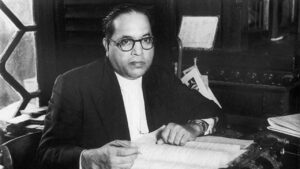 Dr Babasaheb Ambedkar was a prolific writer. His books are as follows:
- Castes in India: Their mechanism, genesis and development (1916)
- The Problem of Rupee: Its origin and its solution (1923)
- The evolution of provincial finance in British India. A study in the provincial decentralisation of imperial finance (1925)
- Annihilation of caste (1936)
- Federation versus freedom (1939)
- Pakistan or the partition of India (1940)
- Mr Gandhi and the emancipation of the untouchables (1942)
- Ranade, Gandhi and Jinnah (1943)
- Communal deadlock and a way to solve it (1945)
- What Congress and Gandhi have done to the untouchables (1945)
- Who were the Shudras? How they came to be the fourth Varna in the Indo-Aryan society (1946)
- States and minorities: What are their rights and how to secure them in the Constitution of Free India (1947)
- Maharashtra as a linguistic province (1948)
- Thoughts on linguistic States (1955)
- The Buddha and His Dhamma (1957) (Posthumous)
- Riddles in Hinduism — An exposition to enlighten the masses (1987) (Posthumous)
- The Untouchables (1987) (Posthumous)
- Philosophy of Hinduism (1987) (Posthumous)
- Revolution and counter revolution (1987) (Posthumous)
- Buddha or Karl Marx (1987) (Posthumous)